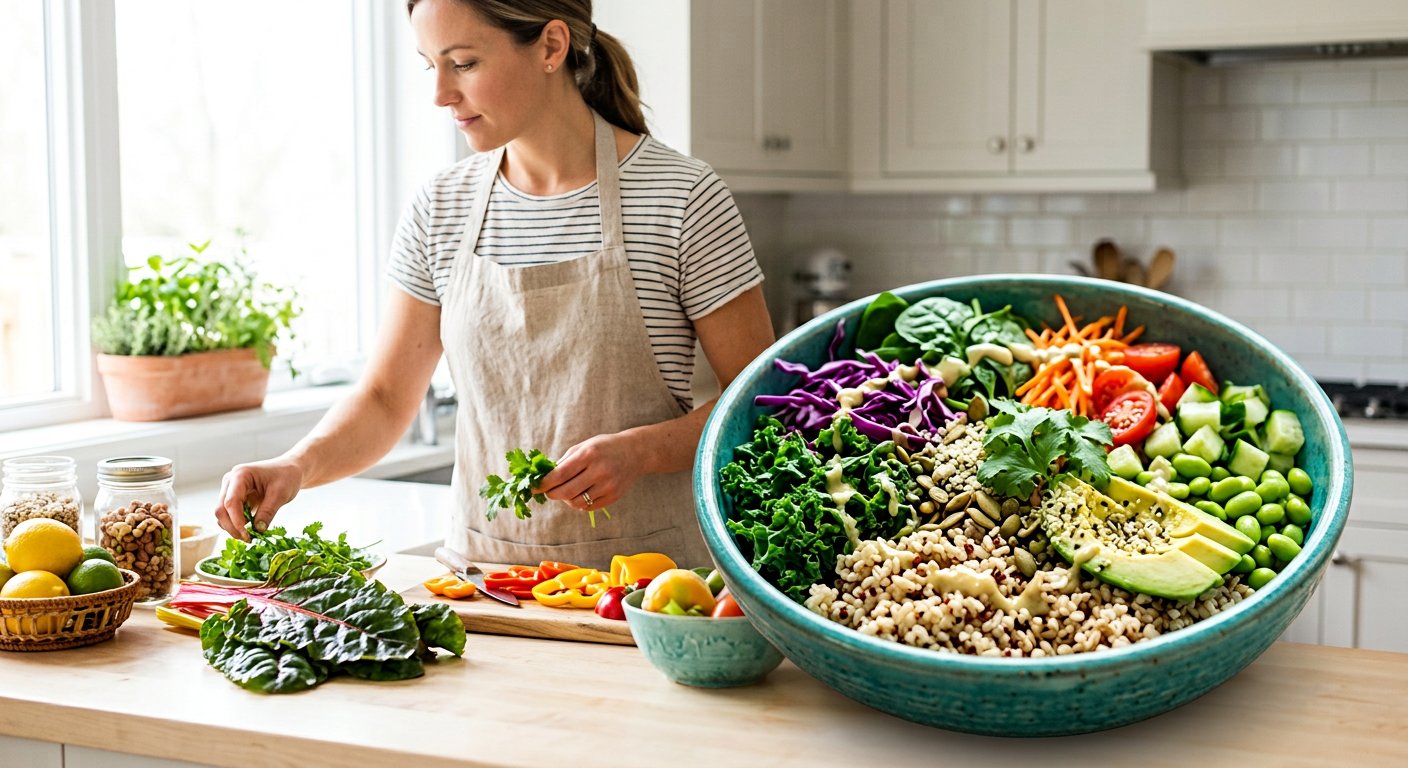
You do not need a calculator to eat well
Nutrition advice often arrives in the form of strict measurements, which is exactly why so many people give up. A balanced plate is a visual framework, not a maths exam. Once you know the shape of a satisfying meal, you can build one from whatever is in the fridge.
The plate, in plain language
- Half the plate: plants. Vegetables and fruit first, in as many colours as you can manage. This is where most of your fibre lives.
- A quarter: protein. Fish, eggs, poultry, beans, lentils, tofu, yoghurt — something that keeps you full for longer than a slice of bread will.
- A quarter: carbohydrates. Rice, potatoes, bread, pasta, oats. Choose the versions you enjoy and, where you can, the ones with more fibre.
- A thumb of fat. Olive oil, avocado, nuts, seeds. Fat carries flavour and helps you absorb vitamins.
The best plate is the one you will actually cook again next week.
Build meals around what you already like
Most people do not need new recipes — they need a small adjustment to the ones they already make. If you love pasta, add a handful of spinach and a tin of beans to the sauce. If breakfast is toast, add an egg or some yoghurt. If your lunch is a sandwich, put something green beside it. These are edits, not reinventions.
Protein at breakfast changes the day
A breakfast with real protein — eggs, Greek yoghurt, beans, tofu — tends to reduce mid-morning snacking and steadies your energy. It is one of the simplest changes we suggest, and one of the most frequently kept.
Drinks count, too
Sugary drinks are absorbed quickly and rarely make you feel full. Water, sparkling water, tea and coffee without much added sugar are straightforward swaps. If you drink alcohol, treat it as something to enjoy occasionally rather than a daily habit.
Plan for the days that go wrong
Busy days are not a failure of willpower; they are a design problem. Keep a few reliable options in the cupboard — tinned fish, frozen vegetables, pre-cooked grains, eggs, hummus — so that a difficult evening does not end in a takeaway by default. Batch cooking one component, rather than a whole week of meals, is often enough.
Be careful with the language you use
Framing food as “good” and “bad” creates shame, and shame tends to end in a binge. Try describing food by what it does for you: this keeps me full, this gives me energy, this is a treat I am choosing on purpose. Our dietitians spend a lot of time helping people rebuild a calm relationship with eating.
When to see a dietitian
Consider a consultation if you have a health condition affected by food — diabetes, high cholesterol, digestive problems, kidney concerns — if your weight is changing without explanation, if you suspect a food intolerance, or if eating has started to feel stressful. We can build a plan around your culture, your budget and your schedule, because the plan that fits your life is the only one that lasts.